
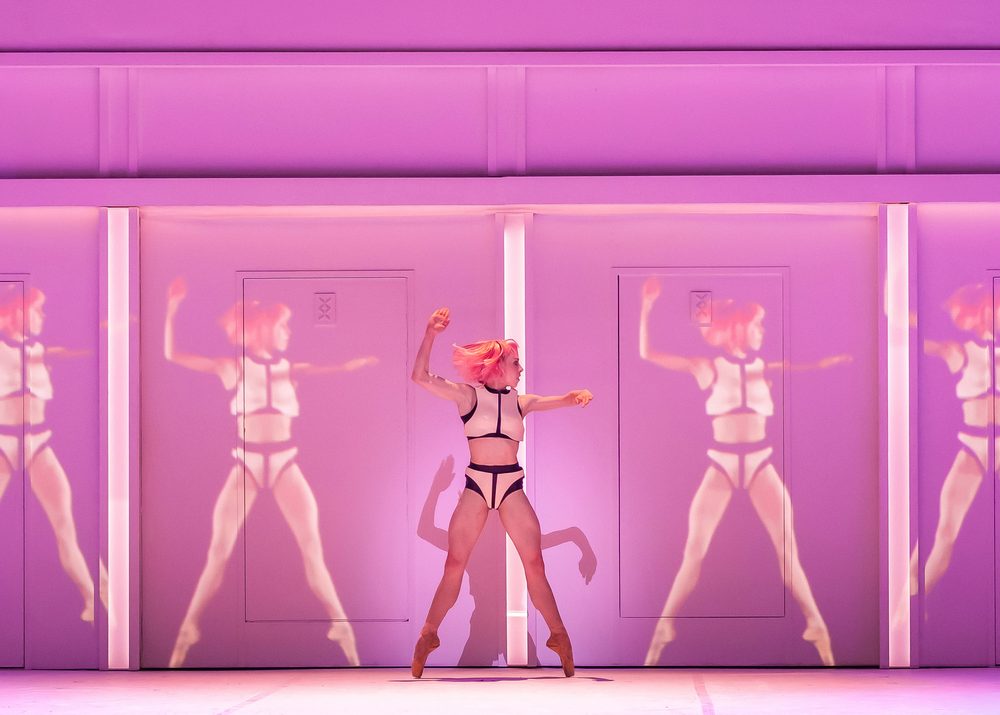
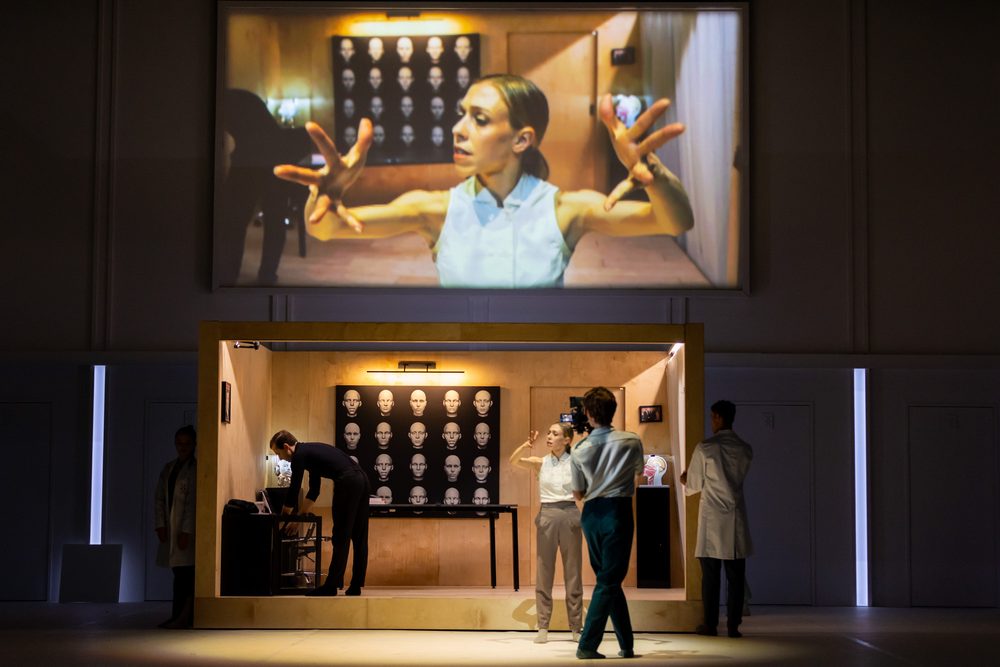
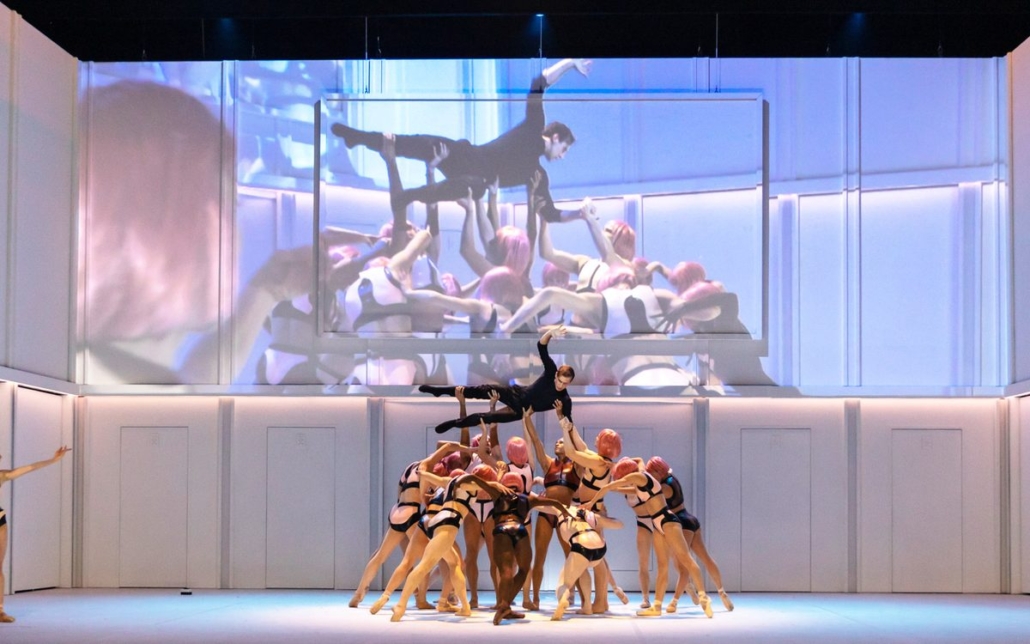
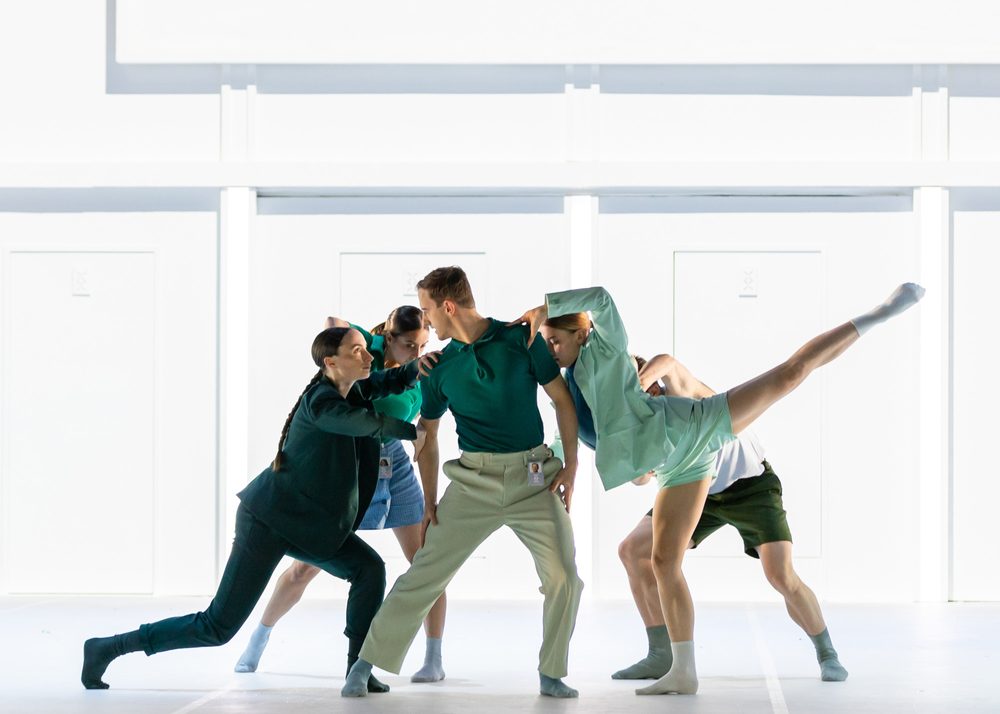
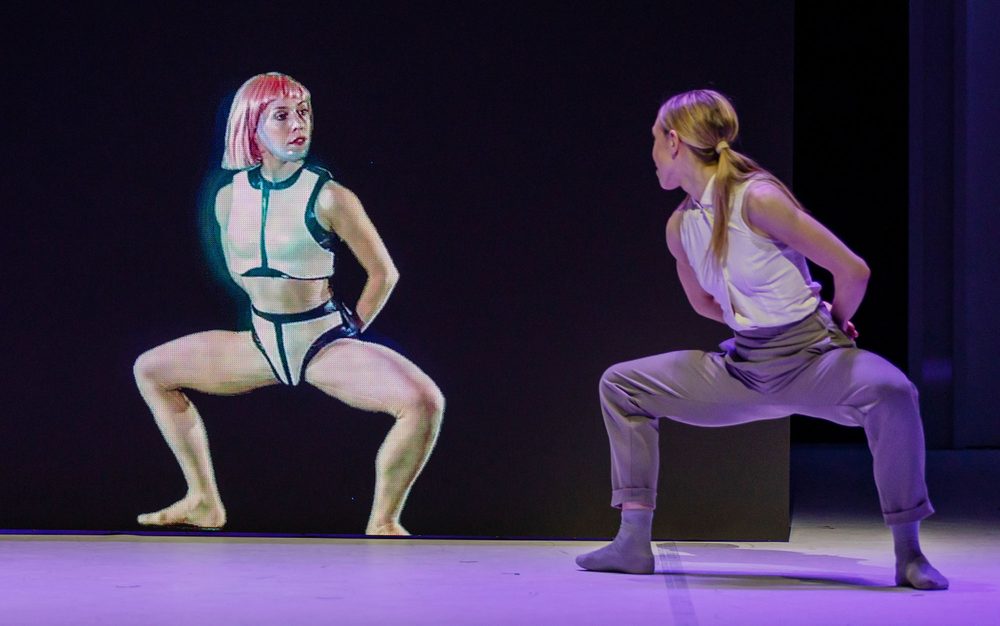
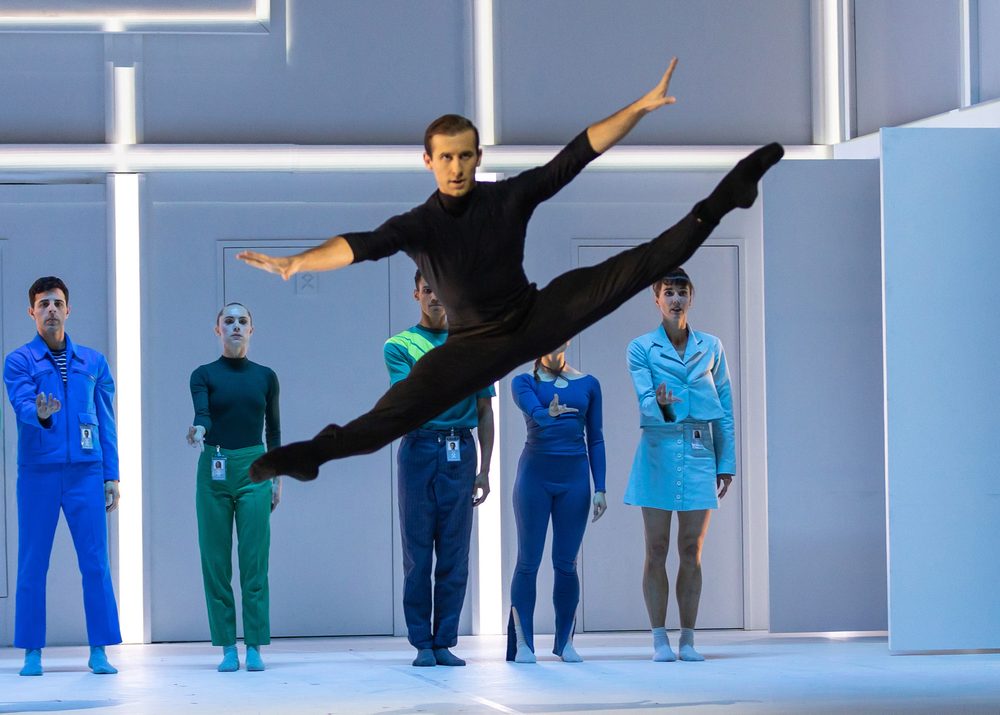
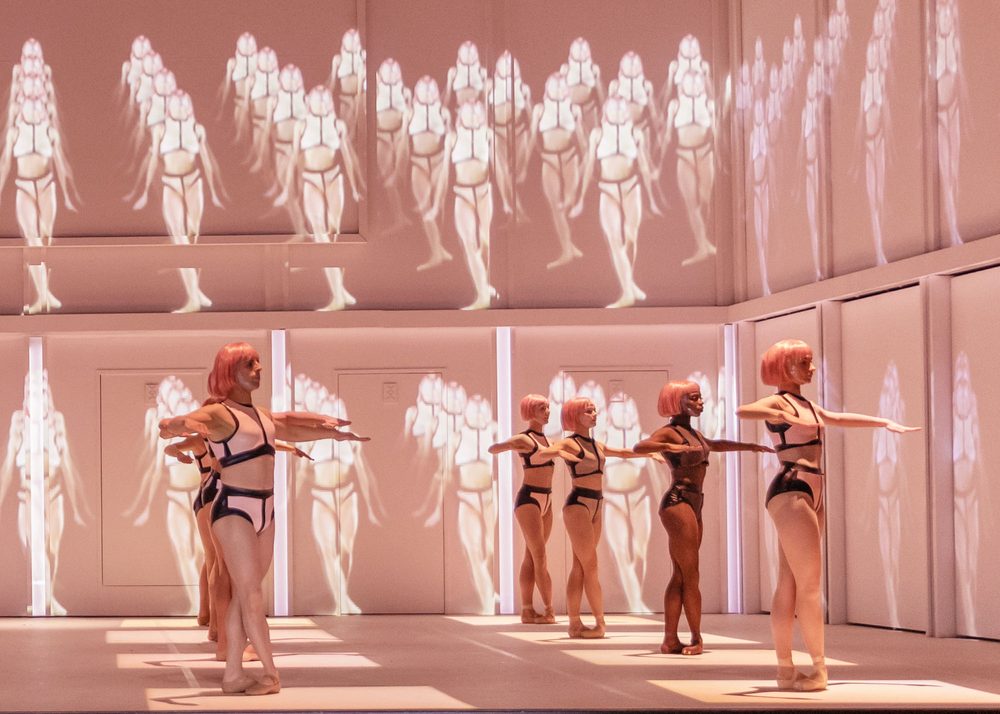
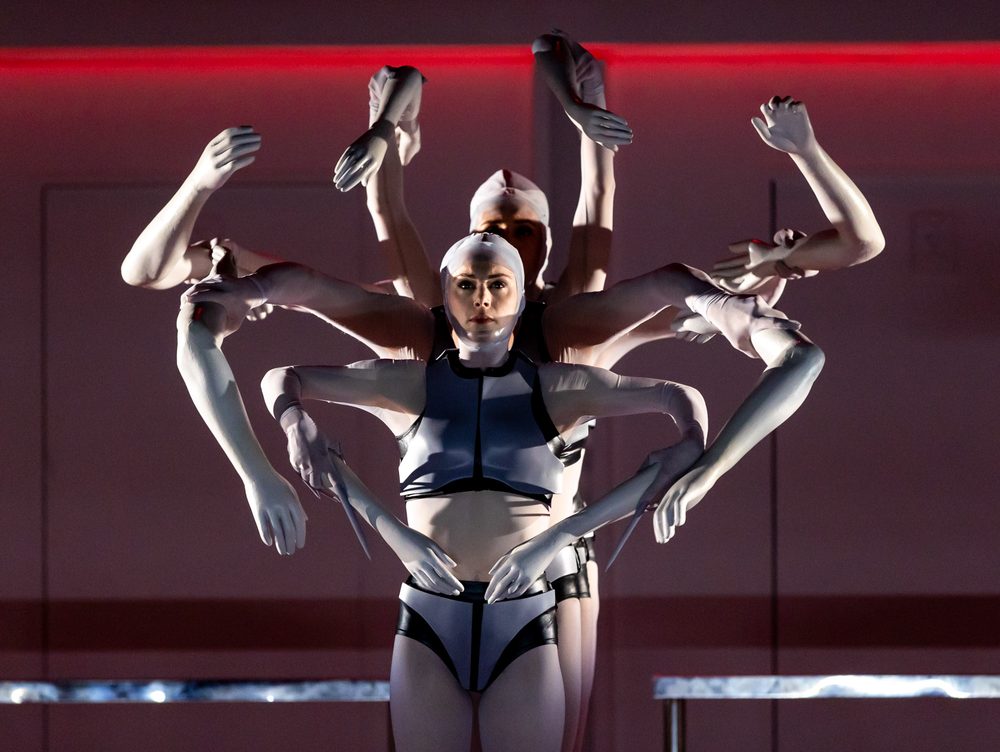
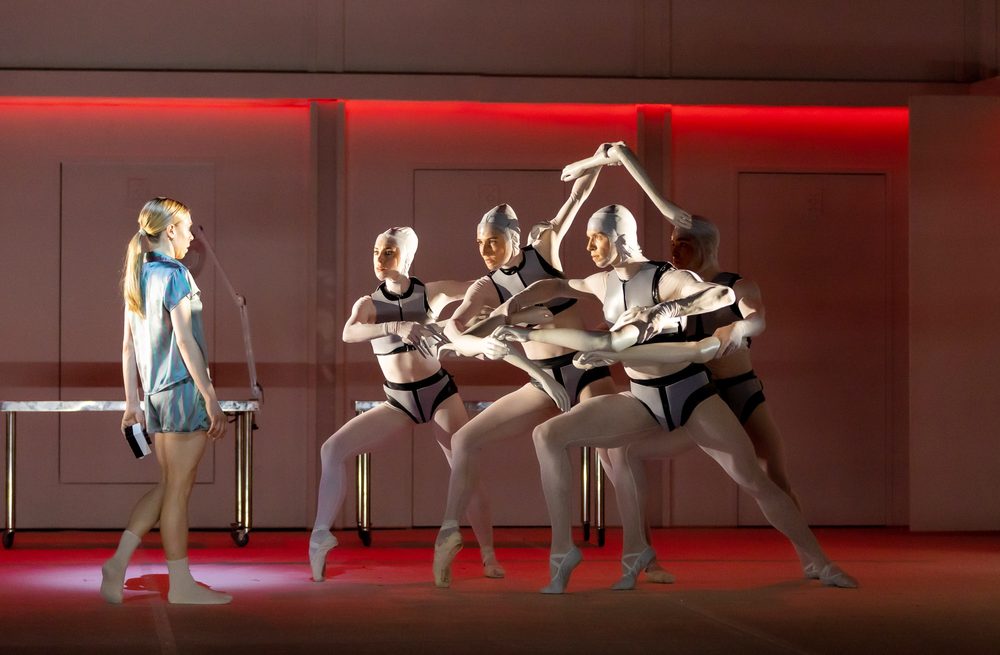
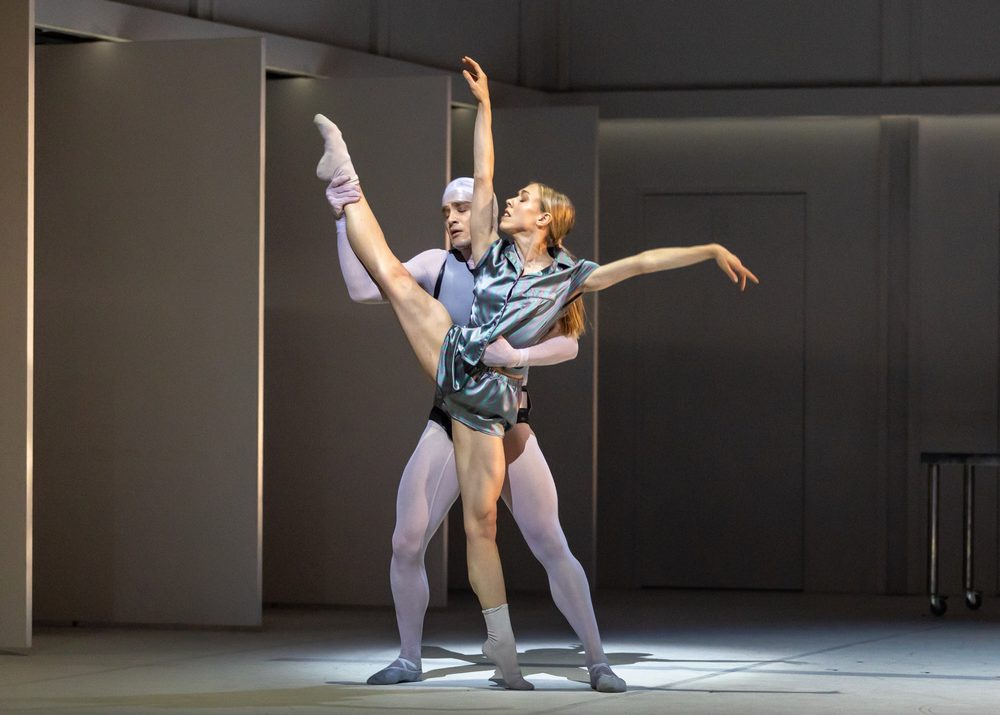
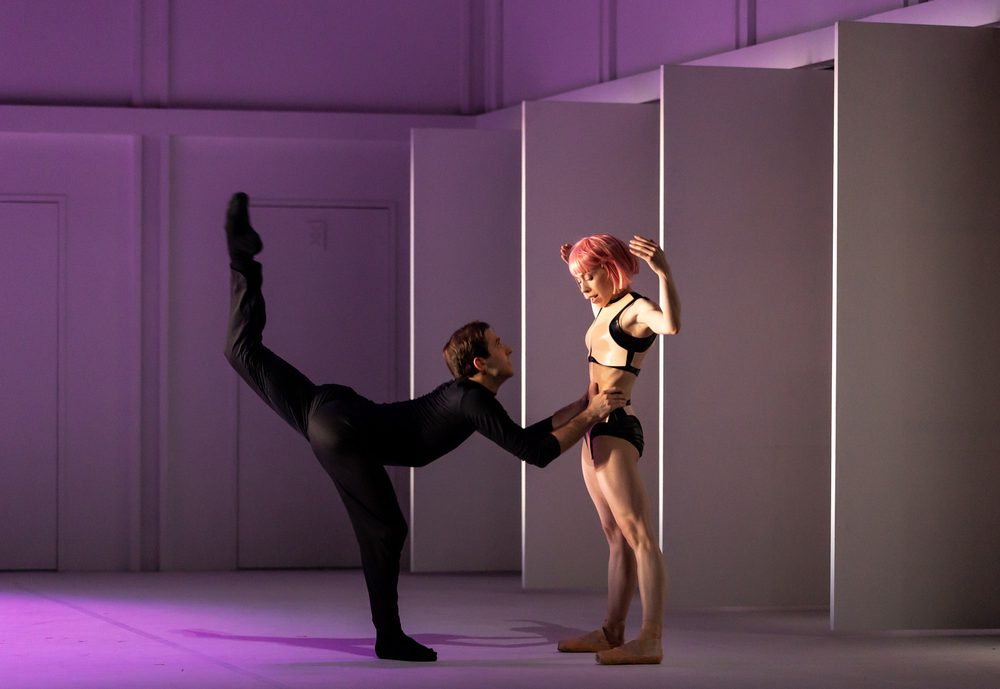
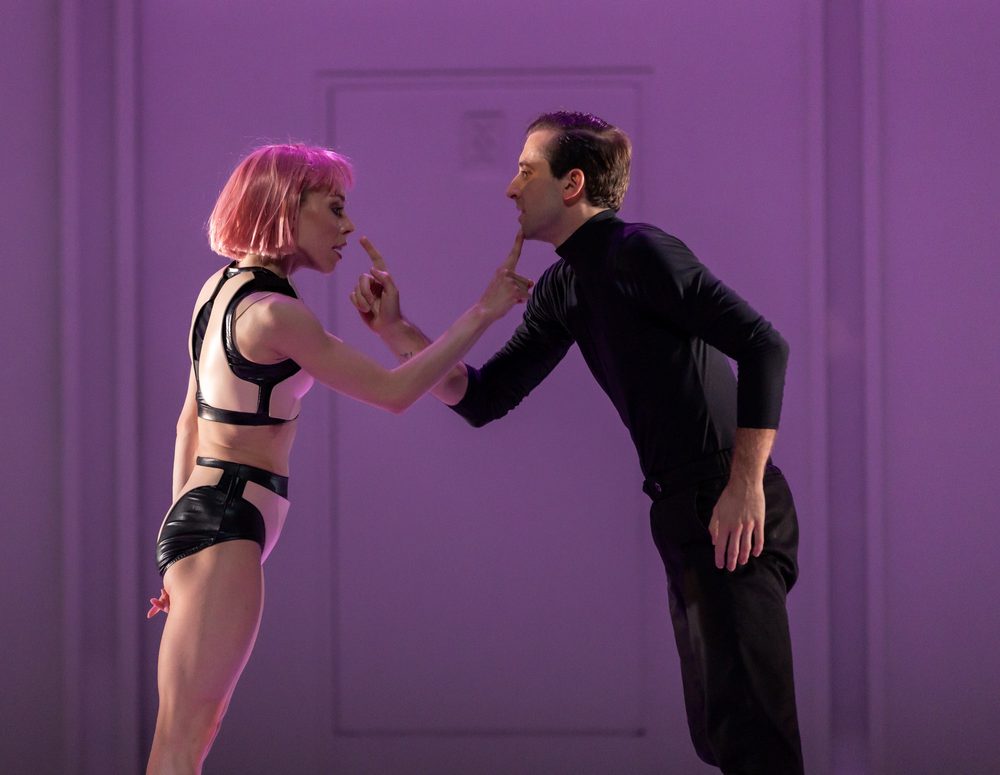
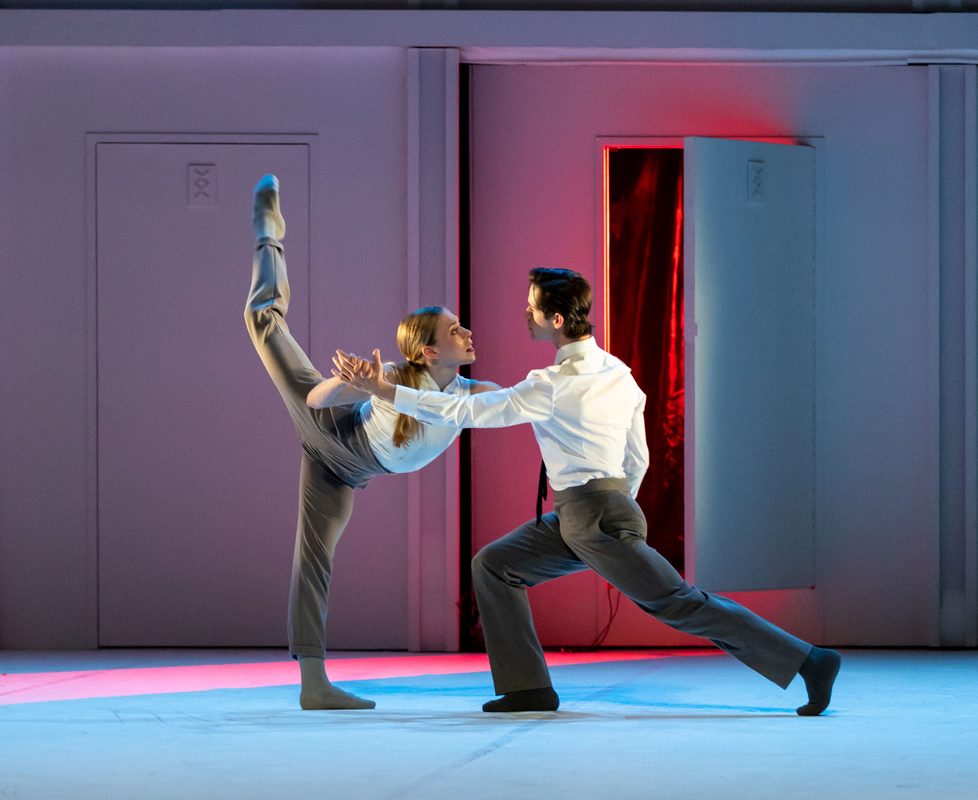
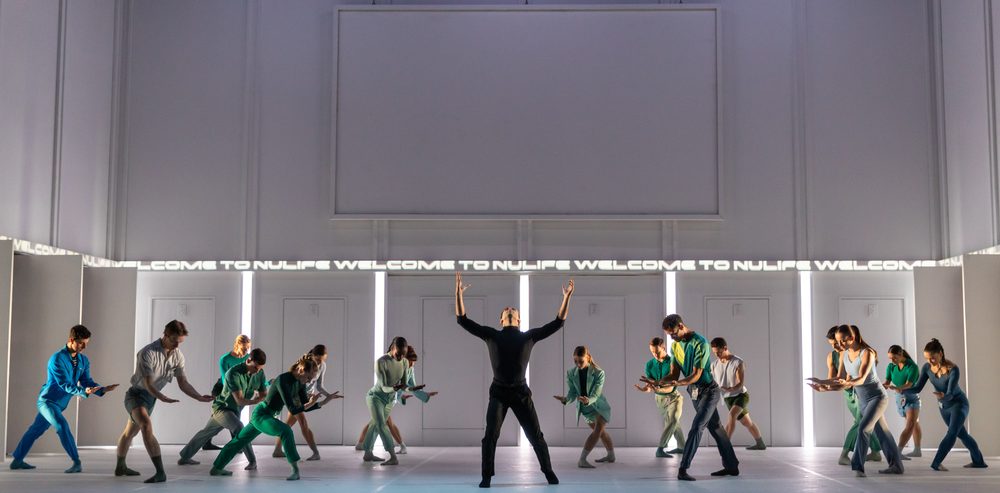
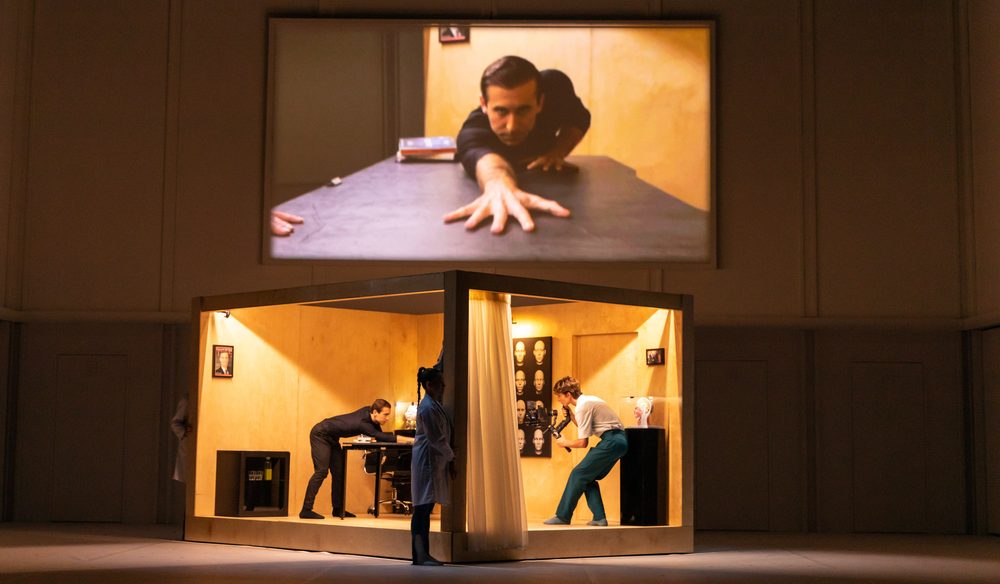
“Coppelia” is a modern ballet by Morgann Runacre-Temple and Jessica Wright, loosely based on the Léo Delibes original (see synopsis for further details on how it has been updated).
The orchestral score is composed by Michael P. Atkinson and Mikael Karlsson and features electronics.
It premiered in August 2022 in the Festival Theater at the Edinburgh International Festival. It has since then toured Scotland and England and traveled to Istanbul, Turkey (2025).
Production photos by Andrew Ross.
Dr Coppelius is Silicon Valley’s hottest new inventor and entrepreneur: the founder and CEO of ‘NuLife’. Swanhilda, a journalist, has arrived at NuLife to interview Dr Coppelius about his latest creation – a revolutionary piece of Artificial Intelligence which he calls ‘Coppélia’. Swanhilda has brought her fiancé Franz along for the ride.
Dr Coppelius makes his keynote address, attempting to show how his Coppélia technology can move off the screen to exist in the material world. But the presentation fails: to his frustration, the robot malfunctions. Despite this failure, Swanhilda notices that her fiancé Franz is powerfully drawn to Coppélia. He is distracted, possessed even.
Swanhilda’s own curiosity about the lab propels her deep into the murky web of NuLife. Leaving Franz asleep, Swanhilda sneaks off to wander the corridors, stumbling upon experiments and creatures in the depths of the laboratory.
Despite the setback of the keynote, Dr Coppelius starts the next day with renewed vigour, suspecting that Franz’s desire for Coppélia may hold the key to bringing her to life. Swanhilda interviews Dr Coppelius for a second time and asks him why people would want to have a relationship with a robot. Dr Coppelius asks Swanhilda why anyone would want to have a relationship with a human.
The lab that never sleeps starts to party. Drunk on their own inspiration and power, the young NuLife scientists fantasise about creating artificial life. As Swanhilda plans to escape, the party closes in around her. Franz is nowhere to be seen. Stealing away from the mob, Swanhilda makes her way to the innermost chamber of NuLife, where she finds Coppélia. Swanhilda realises that she herself could provide a material body for the AI. She slips inside the machine and becomes Coppélia.
Meanwhile, Franz is hunting for Coppélia, the enigmatic screen image with whom he is now completely obsessed. Dr Coppelius tracks and captures Franz, believing he is the missing piece to his puzzle: Franz’s life force can be passed on to his creation Coppélia. Dr Coppelius captures Franz and plugs him into the machine. Coppélia comes alive and demonstrates her impeccable sophistication: she is better than human. Her power over her awestruck creator Dr Coppelius is absolute.
Finally, Swanhilda reveals her identity as an imperfect human. Swanhilda forces Dr Coppelius to face his own arrogance before rescuing the lost Franz. Franz and Swanhilda leave the virtual pleasures of the Lab to face all the complications of the material world before them.
From the Scottish Ballet webpage.
CHOREOGRAPHY, DIRECTION: Morgann Runacre-Temple & Jessica Wright
DRAMATURGY, WRITTEN TEXT: Jeff James
MUSIC: Mikael Karlsson, Michael P Atkinson, Léo Delibes
SET DESIGN, LIGHTING DESIGN: Bengt Gomér
PROJECTION, VIDEO: Will Duke
COSTUMES: Annemarie Woods
ASSOCIATE PROJECTION, VIDEO: Hayley Egan
ART DIRECTION: Sami Fendall
WORLD PREMIERE CAST
SWANHILDA: Constance Devernay
DOCTOR COPPÉLIUS: Bruno Micchiardi
FRANZ: Evan Loudon
Dancers of the Scottish Ballet
CONDUCTOR: Jean-Claude Picard.
“Composers Mikael Karlsson and Michael P. Atkinson use quotes from Delibes’ music in a score that travels from electronic sound-scape to full orchestra, plugging drama into the stage’s cool aesthetic.” The Guardian
“Mikael Karlsson and Michael P. Atkinson’s re-scored music, nodding lovingly to Delibes before veering into orchestral and electronic strangeness, receives a thrilling live performance.” The Stage
“The musical score is compelling and beautifully constructed, weaving references to Delibes into a mesmerising world of synth layers, altered sounds and atmospheric orchestration.” Arts Reviews Edinburgh
“Mikael Karlsson and Michael P Atkinson’s film score, with traces of Delibes, performed live by the Scottish Ballet Orchestra, is a mixtape of genres, strong beats, staccato electronica and lyrical moments for the lovely pas de deux between Swanhilda and Franz.” British Theatre Guide
“The new score, written by Mikael Karlsson and Michael P Atkinson, layers snatches of the Delibes original with an atmospheric mix of orchestral and electronic sound.” The Independent
“Everything about this production is stunning, with a score that reinterprets Delibes with an insistent electronic baseline and Scottish Ballet’s sumptuous live orchestra to create a witty, spirited retelling.” The Wee Review
“Jess and Morgs’ Coppélia takes a big step away from the usual versions, and Mikael Karlsson and Michael P Atkinson’s essential new orchestral and electronic score makes plenty of references to Léo Delibes’ original, nods that sometimes come as a surprise.” … “Karlsson and Atkinson create a score that both honours Delibes and reshapes the musical world of Coppélia, giving the ballet an emotional language completely in tune with its high-tech aesthetic.” SeeingDance
“The new score applies stimulating electronic soundscapes, spoken elements and re-orchestrated references to Delibes in a way that reframes the entire ballet for a modern audience.” … “Scottish Ballet revitalises the tale with remarkable intelligence, and the music, with its electronic and orchestral layers, deepens the work’s exploration of artificial intelligence and human identity.” A Youngish Perspective
“The music pays homage to Delibes’ original themes while expanding them with electronic colours and kinetic rhythms, creating a sound world that perfectly supports the bold storytelling.” BalletCoForum
“An impressive dark, techno-story told in shades of Blade Runner, the electronic augmentations to the as-ever-wonderful Scottish Ballet Orchestra make all the difference.” The QR
“The music is especially outstanding in a couple of choreographic highlights, including a romantic final duet for Swanhilda and Franz and a topical spoof of the tech-boss party scene.” Bachtrack
“The action on stage never stops moving, and the score—reinterpreting Delibes through a vivid electronic baseline and shimmering orchestral gestures—is one of the production’s most powerful contributions to its immersive world.” Lisa in the Theatre
“This was a fusion of dance, original music with playful references to the classical score, and film on the huge backdrop of the Sadler’s Wells stage.” BalletCoForum
“Although there are jumping-off points from the original Delibes’ score, the music is completely innovative with its mix of live orchestra and electronic soundscapes.” … “An exhilarating multimedia experience in which the live dance, film and the score combine in brilliant union.” Broadway Baby

